
The Thread That Connects Me to Japan
Born in Japan and raised in Australia, my life has always been shaped by a quiet thread connecting me back to Japan. In this piece I reflect on childhood memories, rural landscapes, and the experiences that eventually led me back to Japan again and again.
Written by Angie Wilton
11th March 2026
Growing up between Australia and Japan.
I was born in Kamakura, Japan, in 1980. I often recall the story of how I was born in a midwife’s house near the beach. In my mind, I picture a quaint cottage right on the edge of the shoreline, the sound of waves gently lapping the sand while my mother laboured away in this tranquil setting.
The reality, I later discovered, was quite different. Many years afterwards my mother told me it had actually been a very difficult labour. She would joke about how this Australian baby was far too big for her petite Japanese frame. It was something I only truly came to understand after having children of my own.
My parents chose to have me registered as an Australian citizen from birth, so from my earliest days I was already straddling two cultures.
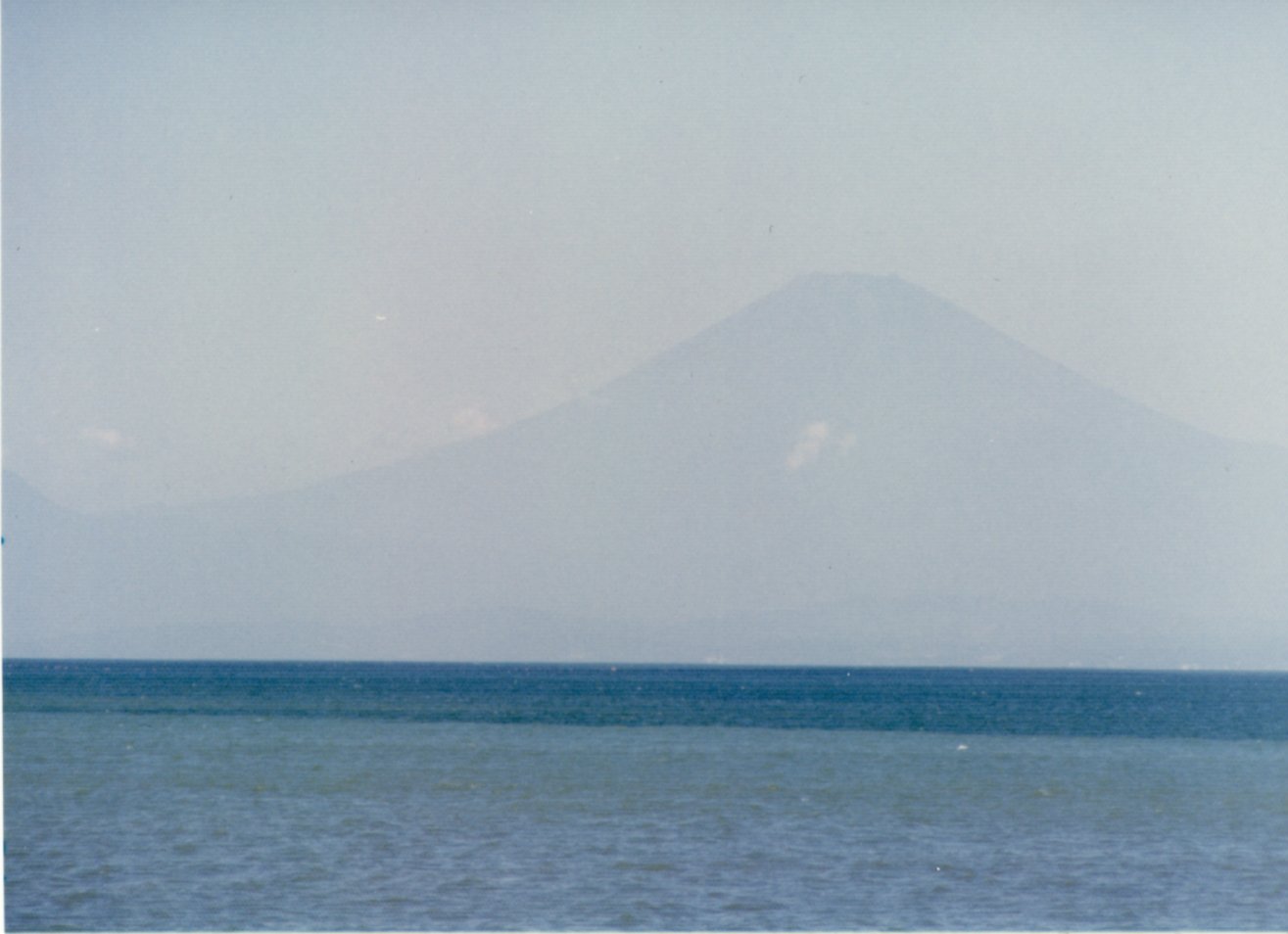
The coastline near Kamakura, where I was born. 1980
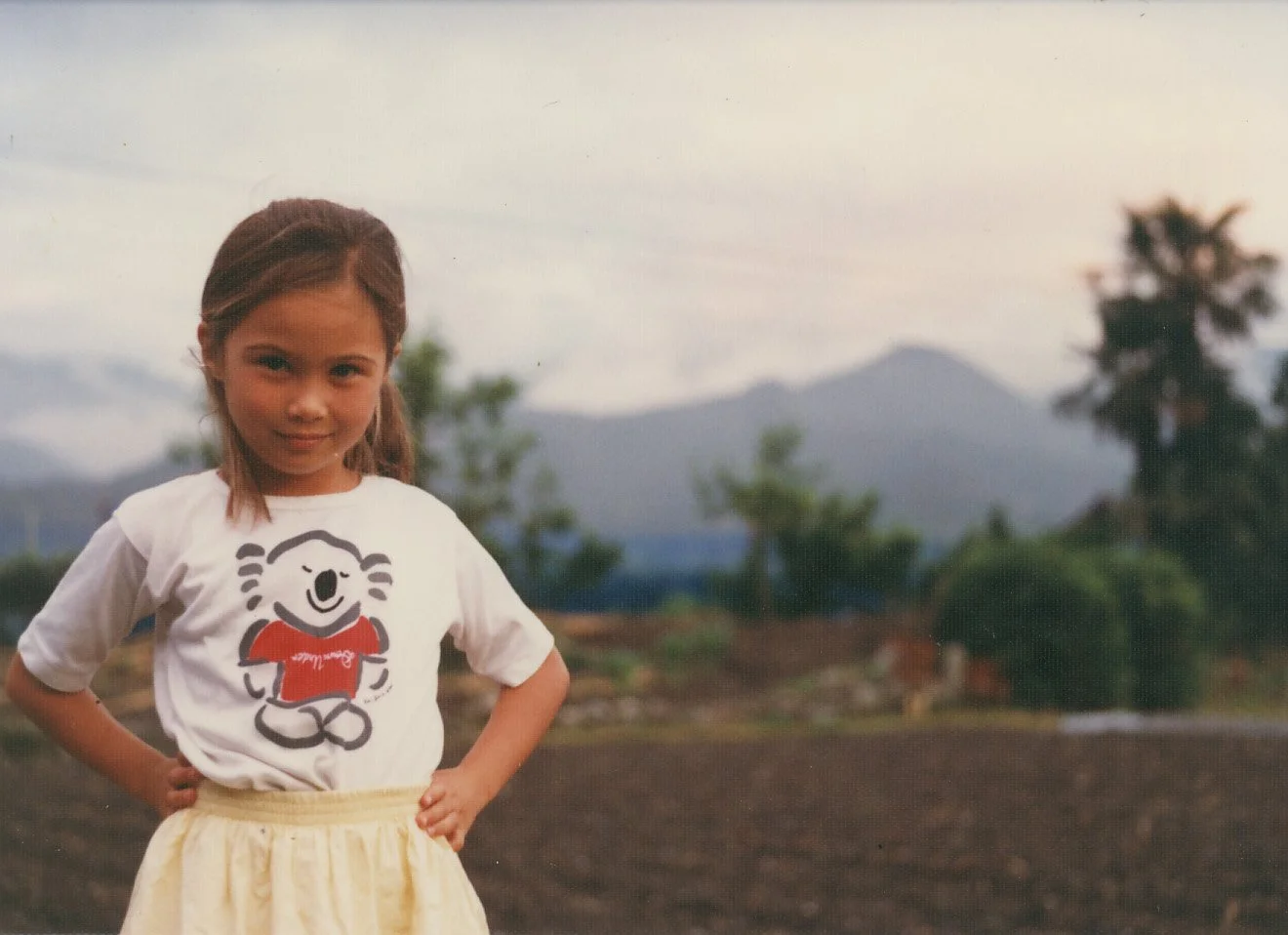
We moved back to Australia when I was one year old, and I spent my formative years growing up in Melbourne. When I was six, my mother’s university studies took us back to Japan for a year. At the time we were living in a small apartment in inner-city Melbourne, and I had dreamt about what it might be like to live somewhere with space, somewhere closer to nature.
Living in rural Japan gave me exactly that opportunity.
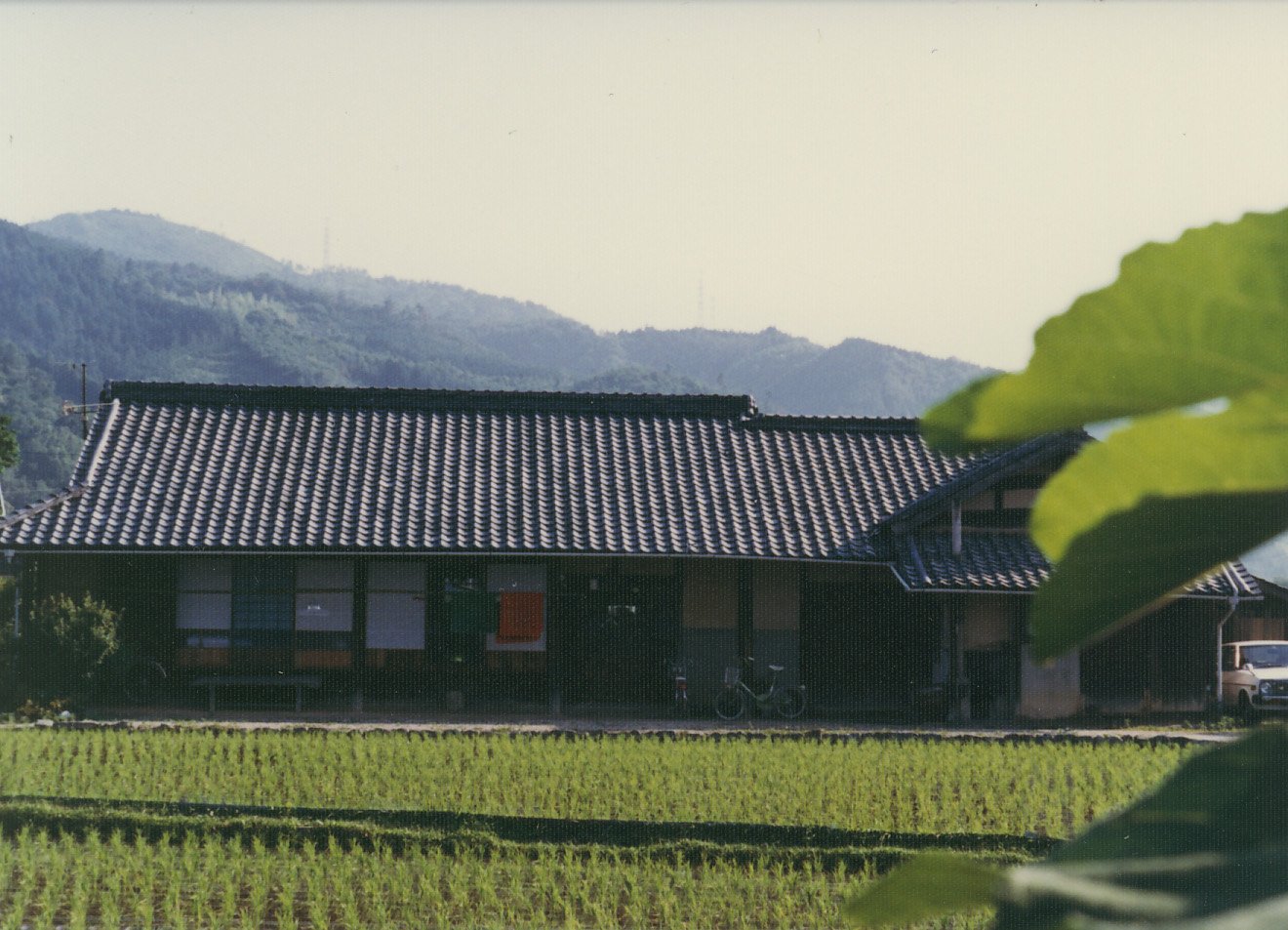
Our house in Rural Japan during the year we lived there. 1987
We lived in a run-down traditional Japanese house that my father renovated just enough to make comfortable for us. Surrounded by rice fields, I remember the sound of frogs echoing through the night. Our toilet was a very basic drop loo (essentially just a hole in the ground), and I remember being completely terrified of going in there after dark. Instead, my parents would sometimes take me to the edge of the rice fields, and I distinctly remember worrying that I might accidentally wee on the frogs.
My memories of that year are filled with joy and laughter. There was wonderful food, kind friends, and endless freedom to explore. I spent days playing soccer with neighbours in the harvested rice fields, or riding my bike to the foothills of the mountains behind our house to visit a school friend.
My school days were filled with excitement for a new language and cultural experience that somehow felt deeply tied to who I was. I was the only foreigner in a school full of Japanese students, but I was met with such kindness that I was instantly made to feel welcome.
We attended local festivals where I was first introduced to Japan’s vibrant festival food culture. Even now my mouth waters at the thought of sizzling hot takoyaki, or the soft, sweet melt of kakigōri on a summer evening. My father taught yoga and English lessons in the community, and I still remember one class where I helped him show the students how to make gingerbread men.
Because I had grown up hearing Japanese at home, I already had an ear for the language. My parents later told me that within my first month in Japan I had switched from speaking English to Japanese. I don’t remember struggling with the language at all.
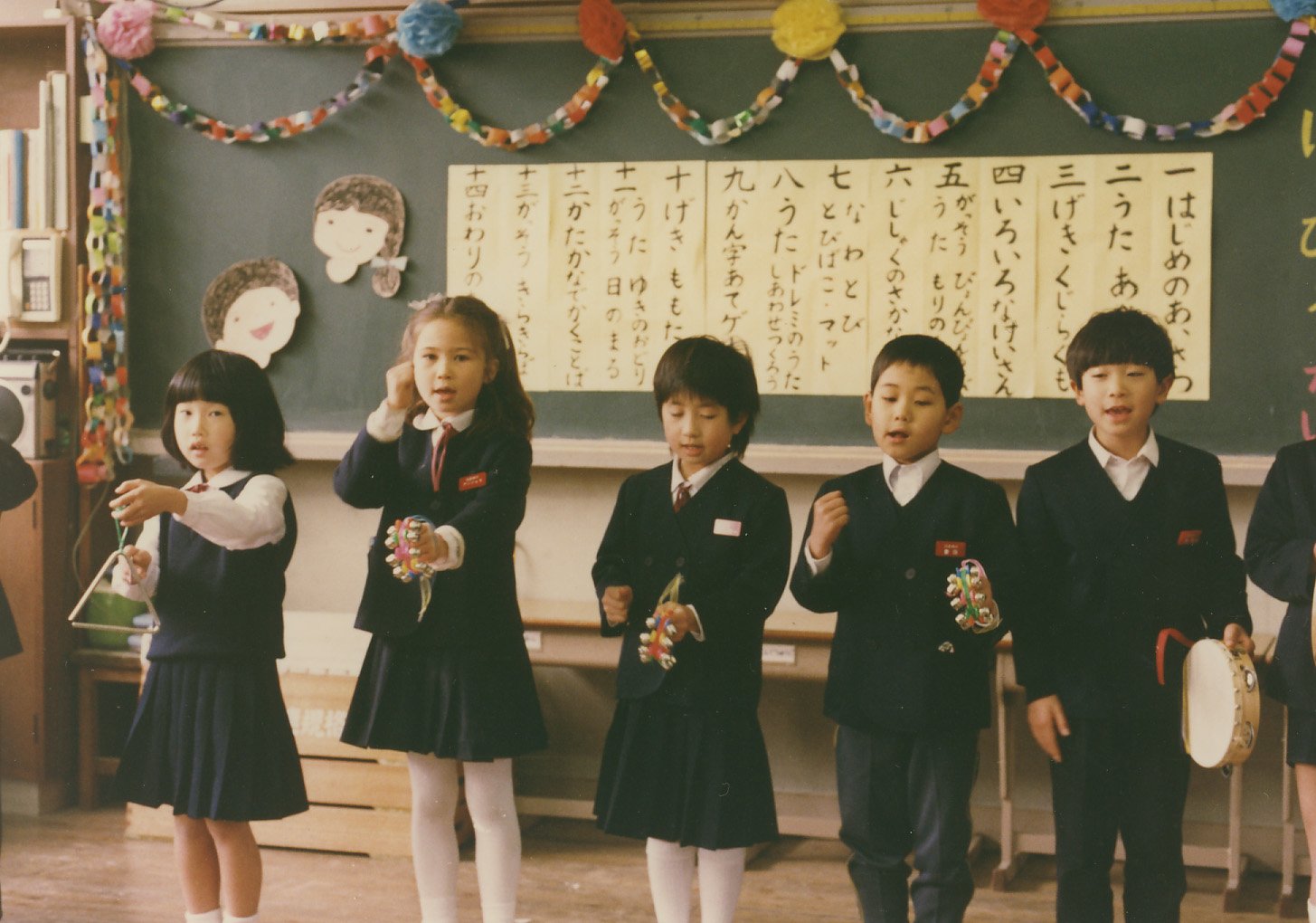
School life in rural Japan
When we eventually returned to Melbourne, my connection to Japan continued. I attended Japanese school every Saturday to maintain the language. As I grew older, this became increasingly difficult, but my parents remained committed to ensuring I continued my studies.
I went on to complete Japanese language studies through my VCE Year 12 and later worked as a Japanese interpreter on the Great Barrier Reef while studying for a Bachelor of Applied Science in Ecotourism.
As an adult, I have often felt that a part of me is missing. Each time I return to Japan, something shifts. I feel complete. I feel whole. I feel more at ease within myself.
I remember watching a documentary on ABC where journalist Kumi Taguchi returned to Japan to explore her father’s heritage. She described experiencing a similar sense of connection. It made me wonder whether this feeling is something many people raised between cultures experience, and how each person learns to navigate that space.
For me, the desire to reconnect with Japan became a quiet thread running through my life. Over time it began to shape the work I created around me, work that allowed me to build bridges between cultures and experiences.
I also began to wonder about something else.
Was the sense of calm and connection I felt in Japan something unique to my own history, or might other travellers feel it too? And if so, what was it about Japan that allowed people to connect so deeply with the place?
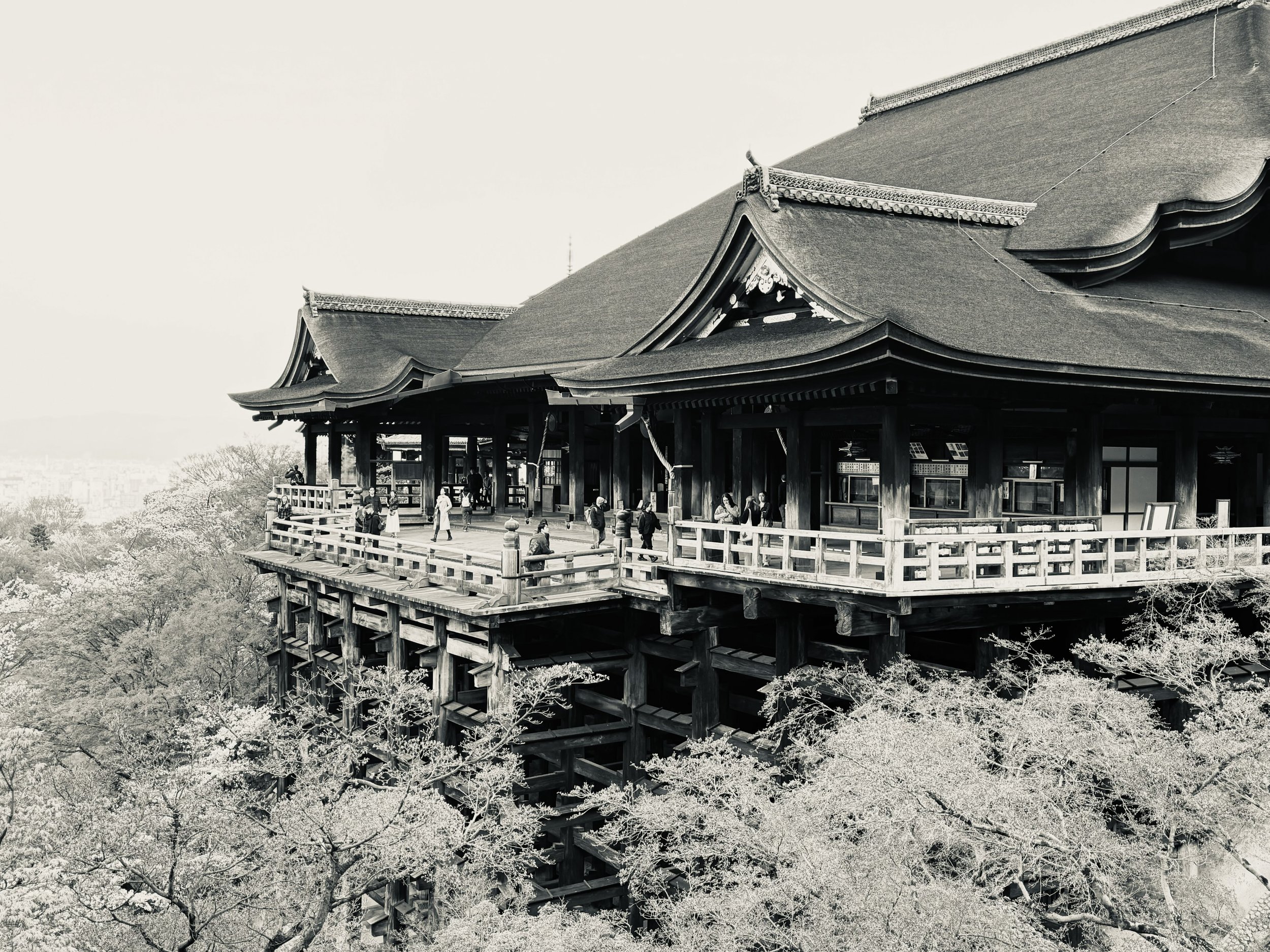
Kiyomizu-dera, Kyoto
Through Japan Art Tours, a travel business I help run with my parents, and through our inaugural Draw Closer journey, I began to see the answer unfold. I watched guests experience the same quiet sense of ease and reflection that I had always felt there.
It made me realise that Japan has a remarkable ability to connect people to something deeper, even when they have no personal history with the country.
I believe this comes from Japan’s profound respect for nature, for cultural heritage, and for the relationships people hold with one another. These values run quietly through everyday life, and for many visitors they resonate deeply.
Over the years, this quiet thread has continued to guide me back to Japan again and again. It has shaped the way I travel, the way I observe, and the way I share this country with others.
Draw Closer to Japan had grown naturally from this connection. An invitation for others to experience the same sense of presence, curiosity, and quiet discovery that has always drawn me back.
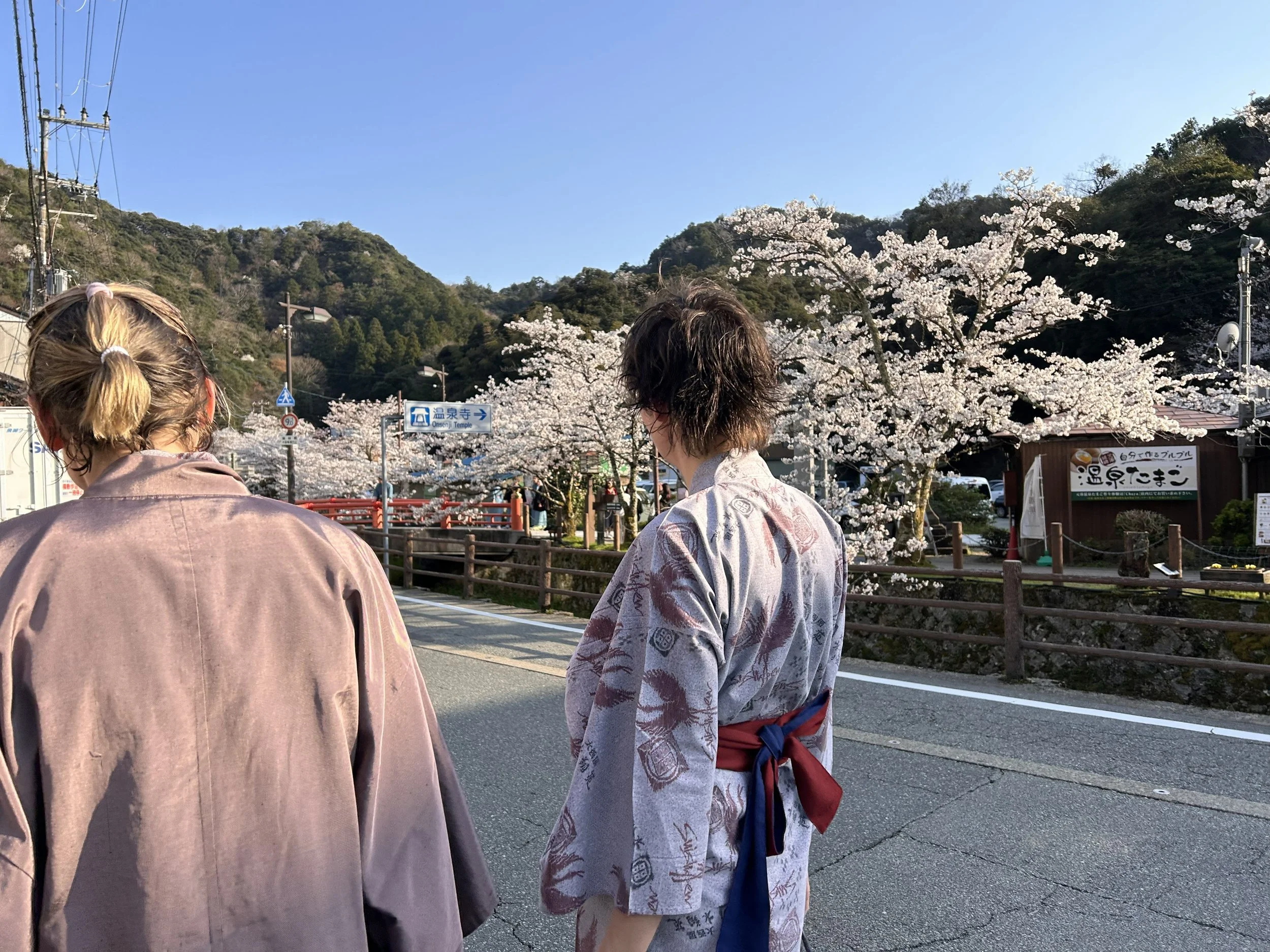
An invitation to connect
The Space Between
The Space Between, a moment of arrival in Koyasan, where travel shifts from movement to stillness, and attention begins to deepen.
Written by Honor Bradbeer
30th January 2026
We were six giggling women, carrying bags of souvenirs.
So far, we had been unambiguously tourists. We carried multiple train tickets secreted in pouches. We had clattered our wheeled suitcases into our serene temple accommodation. We had taken turns being photographed with a giant Totoro. We had taken three trains, a cable car and a bus to get here.
We had made all our connections.
But we hadn’t yet connected.
Now we stood outside the Kongobuji Temple in the mountain village of Koyasan, in crisp sunshine.
I don’t remember what, exactly, we were giggling about.
But I know why we were giggling.
We were giggling with the novelty of having no responsibilities, having tearfully farewelled our families back in Australia. We were giggling with mild jet lag. We were giggling with the surprise of sudden new friendships. We were giggling at the incongruity of being in a sacred place with plastic bags swinging from the crooks of our elbows, and feeling inadequate to the monumental structure before us.
I was a little bit daunted.
I felt the pressure to transition from tourist to artist. I didn’t want my sketchbook to hold the drawn equivalent of happy snaps. I wanted this to be meaningful.
Sacred places don’t always work for me.
I can feel unequal to them, and their magic can feel closed to me. Sometimes it is the very anxiety to connect that creates a barrier to connection.
I gazed up at the enormous structure with its thickly thatched roof. I thought, wow! But I felt - what?
Still giggling, we exchanged our outdoor shoes for ill-fitting slip-ons, before shuffling in dutifully reverent silence into narrow timber-floored corridors lined with rice paper screens. On one side, the screens opened onto courtyard gardens, on the other, onto empty rooms.
The rooms were empty because they were barred to visitors. Polite notices asked us to stay out. The walls of the rooms were giant painted sliding screens, adorned with exquisite depictions of cranes and blossoms, glowing dimly with gold leaf. We peered at them, across the threshold, across the bare, untroubled tatami floors. The stillness was commanding.
I tried to feel reverent, but I felt anxious that I wasn’t doing it properly. I didn’t know what I was revering. My knowledge of Shingon Buddhism is minimal. I briefly scanned the brochure in my hand. I scrabbled around in my brain for my knowledge of oriental painting. I had taken weekly classes in Chinese and Japanese ink brush painting for a decade of my childhood, but now my knowledge felt childish: Space is important. Asymmetry is important. The brush is an extension of the body. The whole body paints. Breath is important.
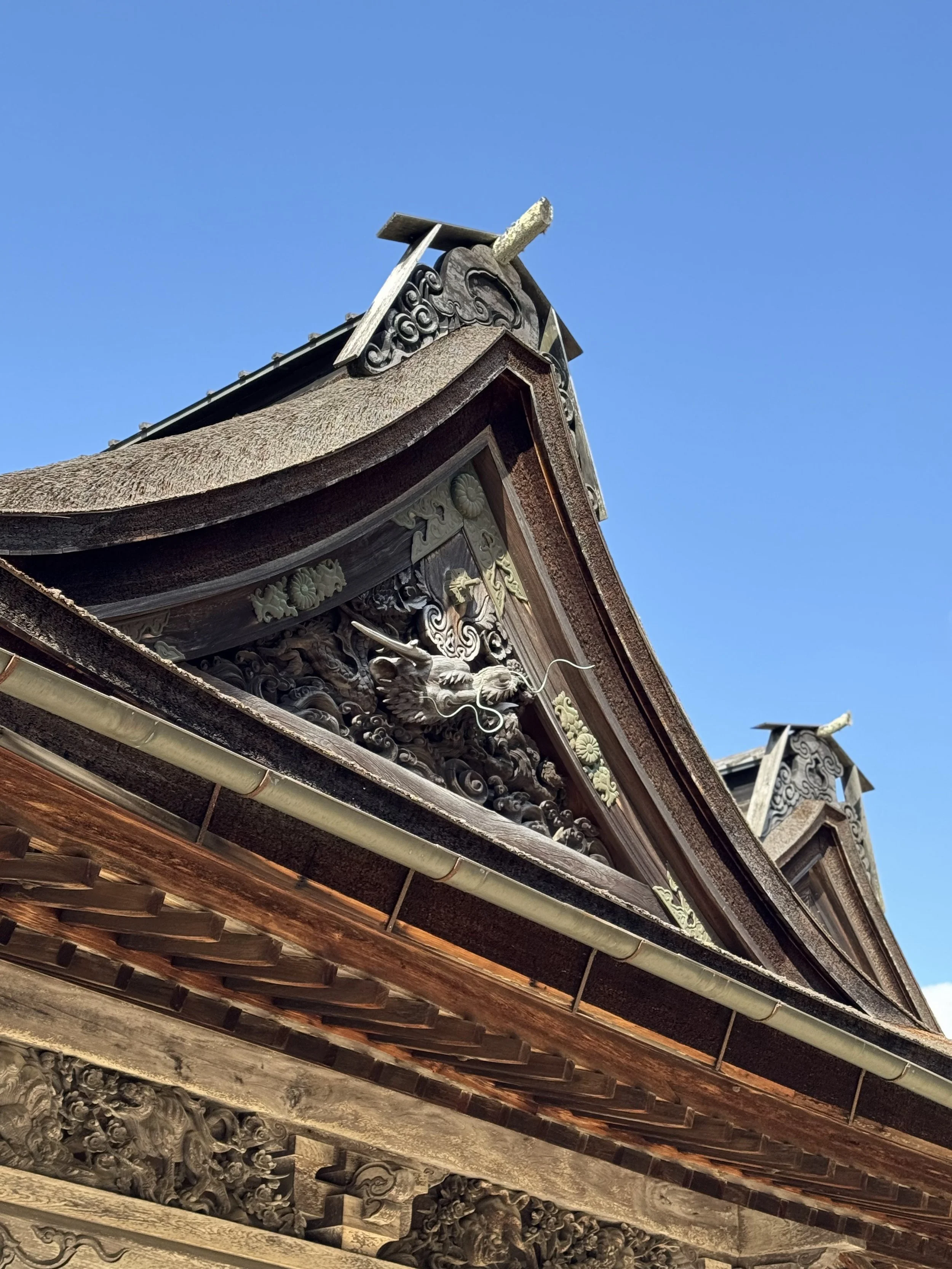
Kongobuji Temple, Koyasan
I breathed, and looked across the room, and observed the spaces in the compositions, and imagined the artist painting the large cranes with his whole body, each brushstroke a visible trace of his unfolding movement in space.
My travel companions gathered silently in the doorway with me, mutely pointing out features of interest. I wondered if they were connecting better than me. I wondered how much knowledge I would need in order to understand. I wondered whether there can be connection without understanding. I wondered if my deodorant was failing me.
We shuffled down the corridor, pausing at room after room, to gaze in appreciation at the different screens, depicting the changing seasons and nature’s beauty in the form of plum blossom, willow, birds and snow.
In the Willow Room, the polite ‘keep out’ notice was accompanied by an arresting piece of information. In this room, in 1595, a man had performed ritual suicide at the command of his uncle, Toyotomi Hideyoshi, the most powerful man in Japan at the time. (The full story of Toyotomi Hidetsugu’s punishment is as appalling as can be, and not for the faint-hearted).
I looked across the tatami-floored space with a different awareness.
How serene it seemed! Here, where such an unfathomable act had taken place.
In this room, despite the mastery of the gilt screens, the empty space was the most active element.
We filed outside, silent, now, of our own volition.
I felt the weight of my lack of understanding differently. I had thought I was looking for something holy here, something to which I was unequal. I had felt ashamed of my bafflement. Now, I recognised the universal bafflement of being human in a bewildering world.
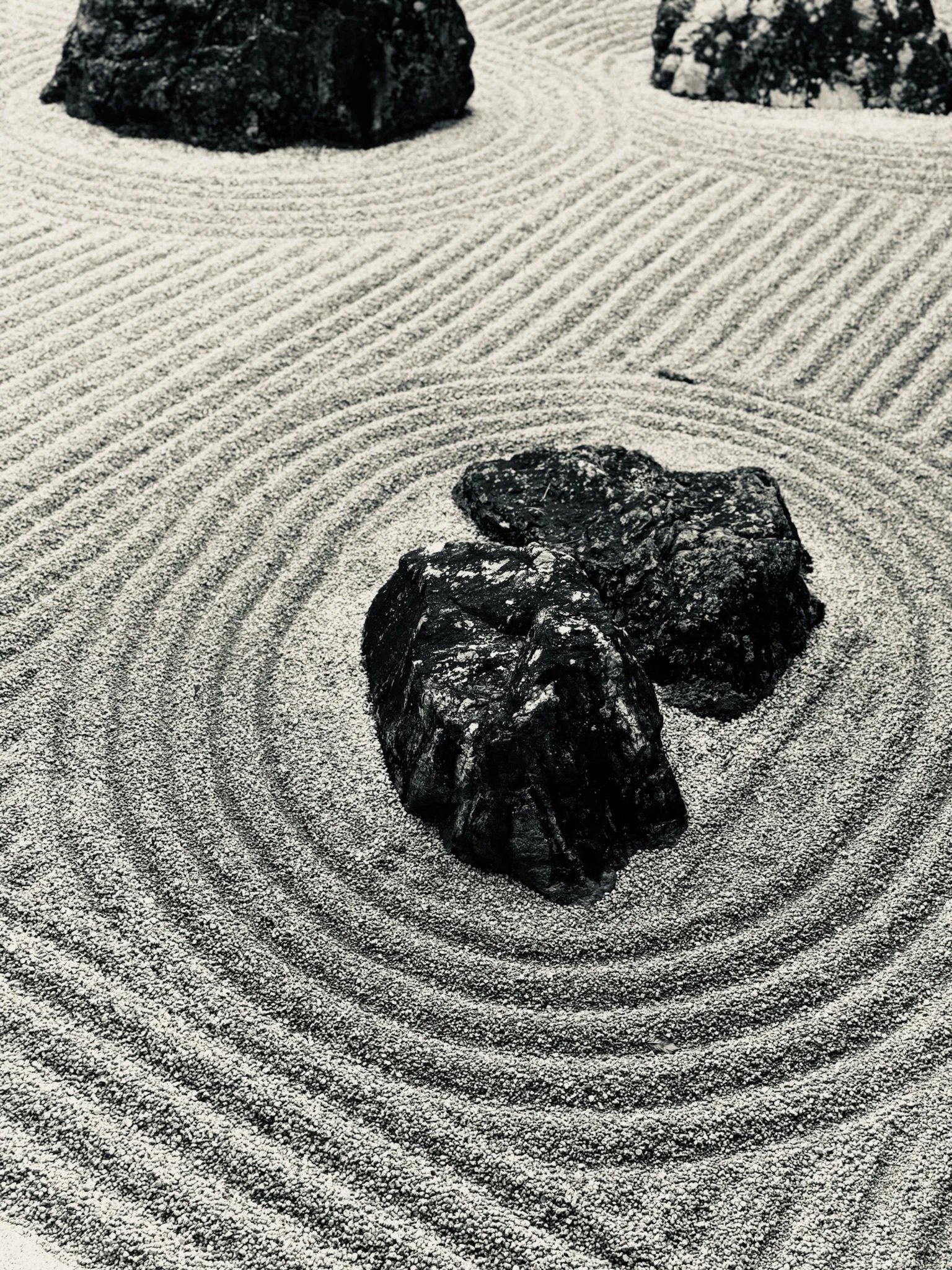
The door we had stepped through took us out onto a balcony skirting the back of the temple, looking out on the Banryu-tei rock garden (the largest in Japan). The orderly stillness matched that of the interior, except for a breeze that made a gleaming spiderweb billow between the fingers of a silver birch.
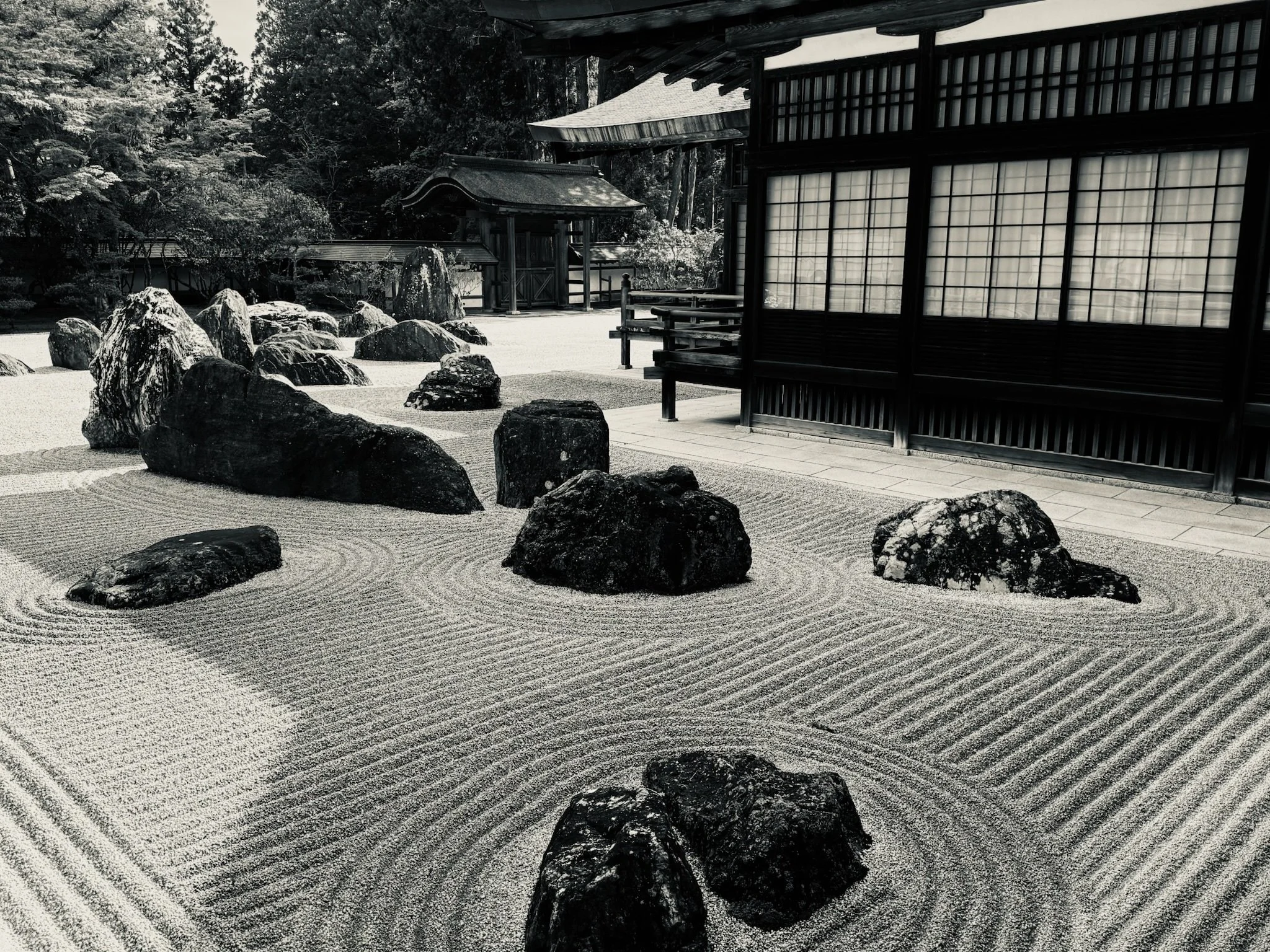
Kongobuji Rock Garden, Koyasan
But here, I felt a point of connection. The large rocks in their motionless sea had a steadying power over my discombobulated soul. They would stand like this in a hurricane, or under snow. I imagined the process that had put them in place, just so. The human brain - capable of atrocities - that had instead chosen to position objects in a quiet arrangement, to enter the gentle, spiritual pursuit of composition. This goes here, and this goes here.
I took out my sketchbook and began to trace the shapes of the rocks lightly on the page, as the sun lengthened the shadows in the empty space between them.
Drawers and Explorers: How we Travel
An introduction to Draw Closer and the ways we travel.
On slowing down, paying attention, and allowing space for something meaningful to emerge.
Written by Angie Wilton
20th January 2026
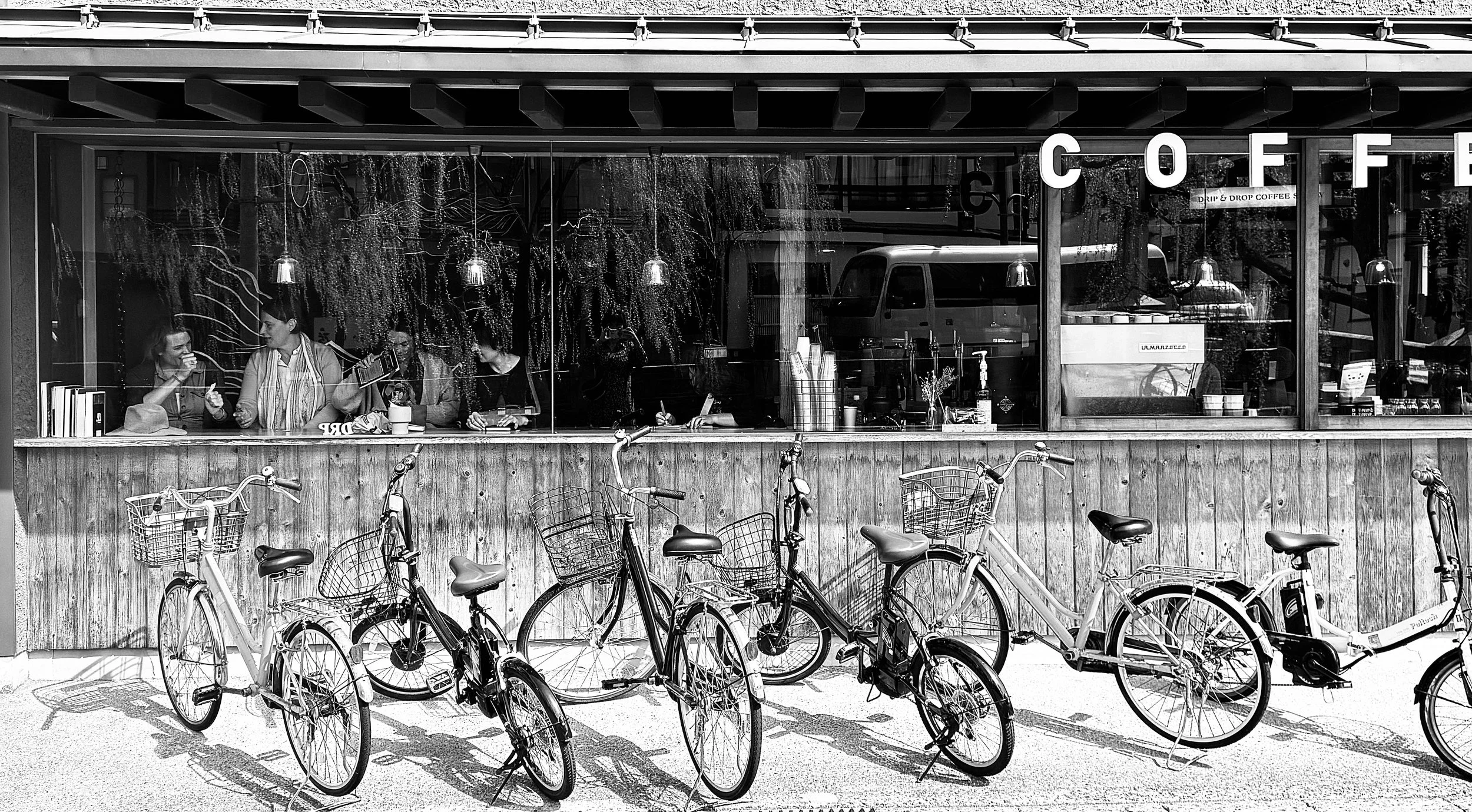
Coffee, conversations and sketches at Kinosaki Onsen
When we travel, we tend to lean in different directions.
Sometimes, we are drawn to connection through encounter. We move through landscapes, follow threads of history, culture and place, and allow understanding to form through walking, conversation and shared experience. These are the moments when we travel as Explorers.
At other times, we are drawn to connection through attention. We linger. We return to the same street at different times of day. We sit, watch, draw, write, notice. Understanding forms slowly, through repetition and care. These are the moments when we travel as Drawers.
Neither way is better.
Most of us move between the two.
Draw Closer is an invitation to travel more thoughtfully.
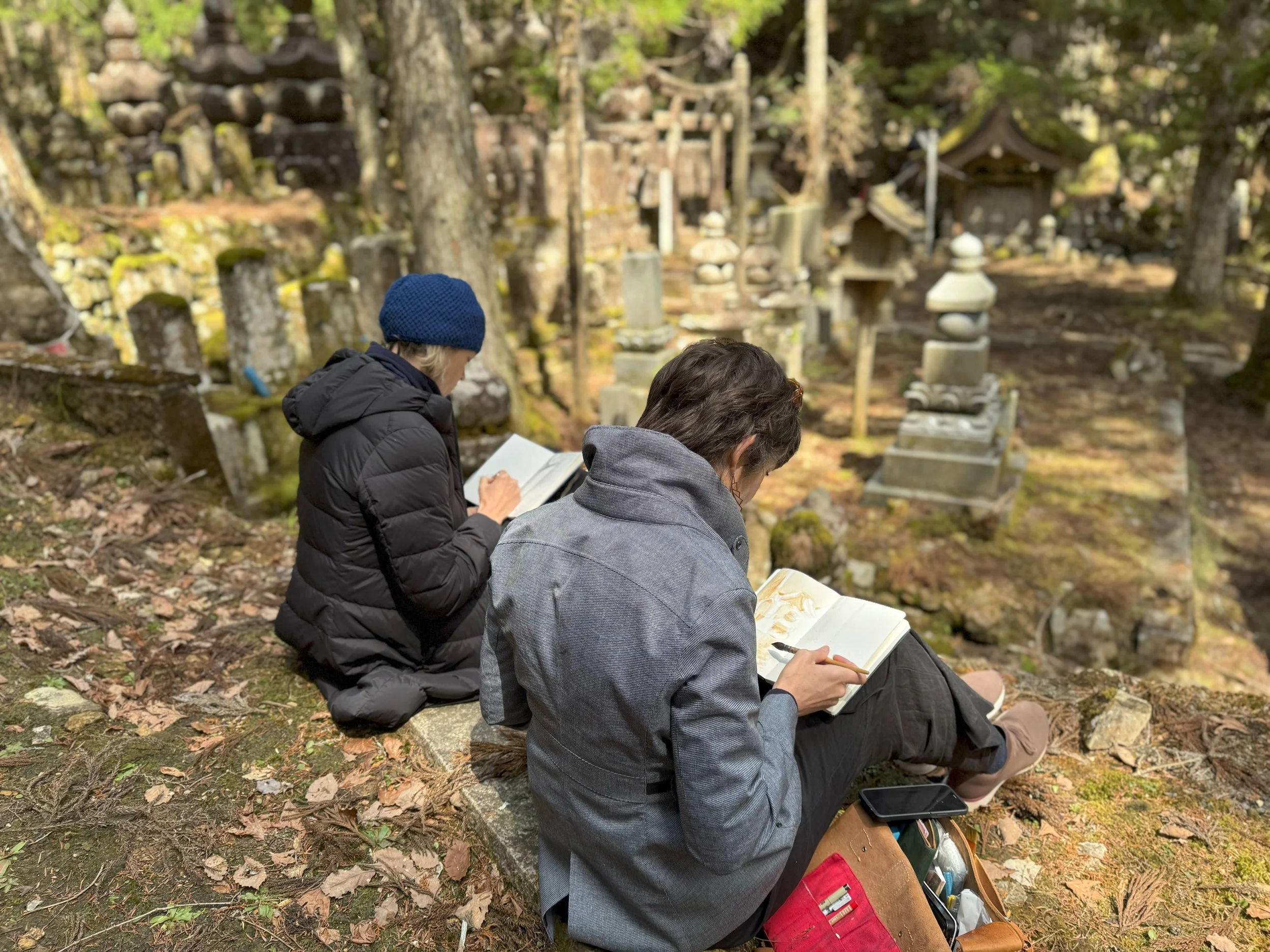
Quiet contemplation and drawing at Okunoin cemetery
Much of what will draw people to Draw Closer is not a desire to escape everyday life, but a desire to step out of its constant demands for a short while.
Many of the women who travel with us arrive from busy, full lives. They are thoughtful, capable, often carrying responsibility for others. They come not because they are lost, but because they are full. Full of work, of care, of decision-making, of noise. What they are seeking is not reinvention, but space.
Space to slow down.
Space to notice themselves again.
Space to just be.
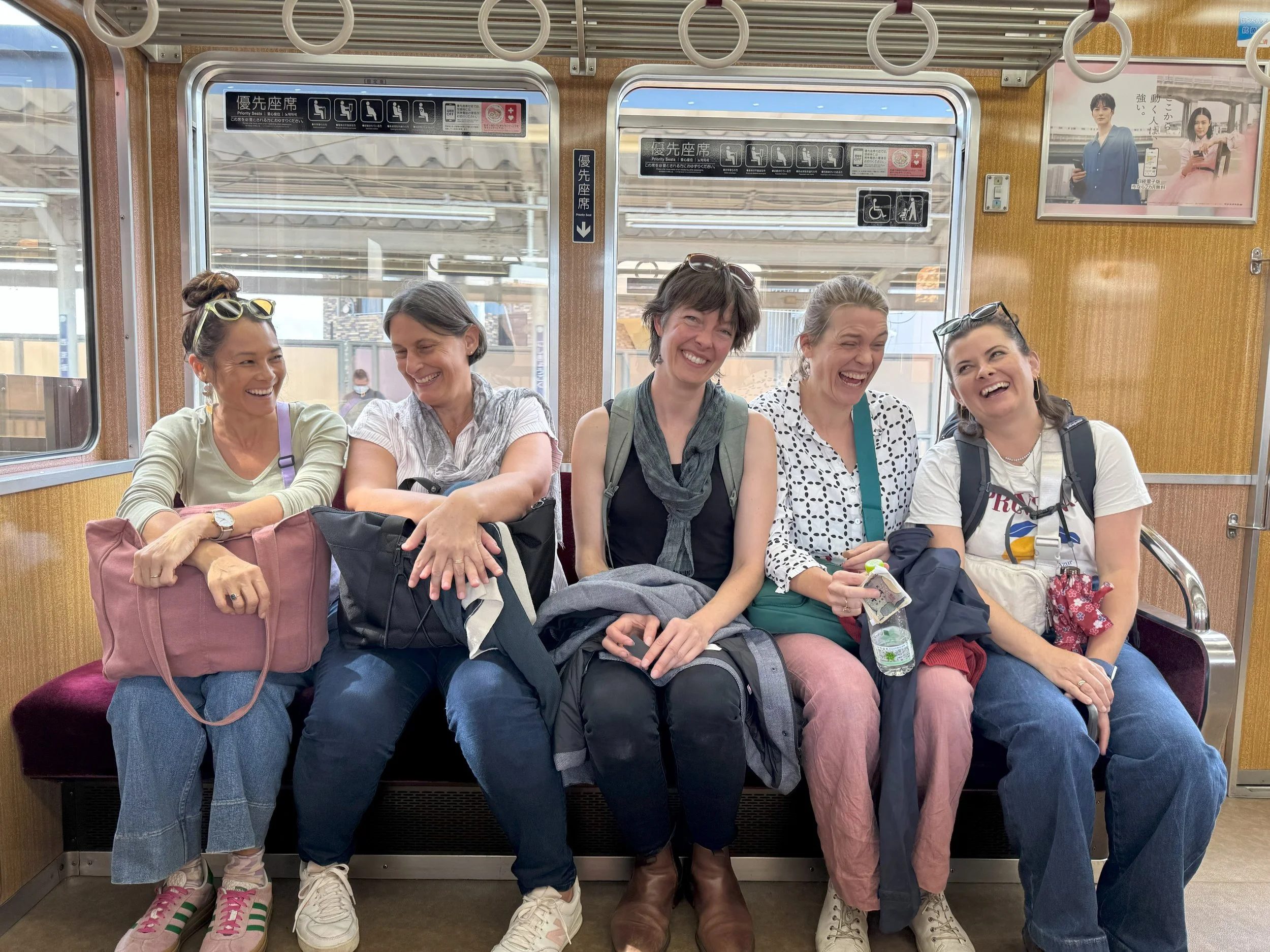
Kyoto commute
We work with small groups by design. Intimacy changes everything. In a small group, it becomes possible to arrive as you are, rather than who you need to be. There is time to listen, to be quiet, to speak without competing for space. Friendships form gently, through shared experience rather than forced connection.
Drawing plays a quiet but important role in this. You do not need to be “good at it”. You do not need to show anyone what you make. For us, drawing is simply a way of paying attention. A way of being present. A way of allowing the mind to settle. It offers permission to be unfinished, to not know, to let something emerge without rushing it.
Just as important as what we include is what we leave out.
Our journeys are not packed with activity. There is rest. There are unstructured moments. There is time to wander alone, and time to come back together. We trust that what is meaningful cannot be scheduled too tightly.
At the heart of Draw Closer is a shared belief about what makes experiences meaningful.
We are two women with different ways of seeing, different histories, and different relationships to drawing and travel. What connects us is a long friendship, a deep respect for each other’s practices, and a shared belief that the most profound experiences often arise when we allow ourselves to slow down enough to notice them.
Together, we create the journey.
What each woman takes from it is her own.
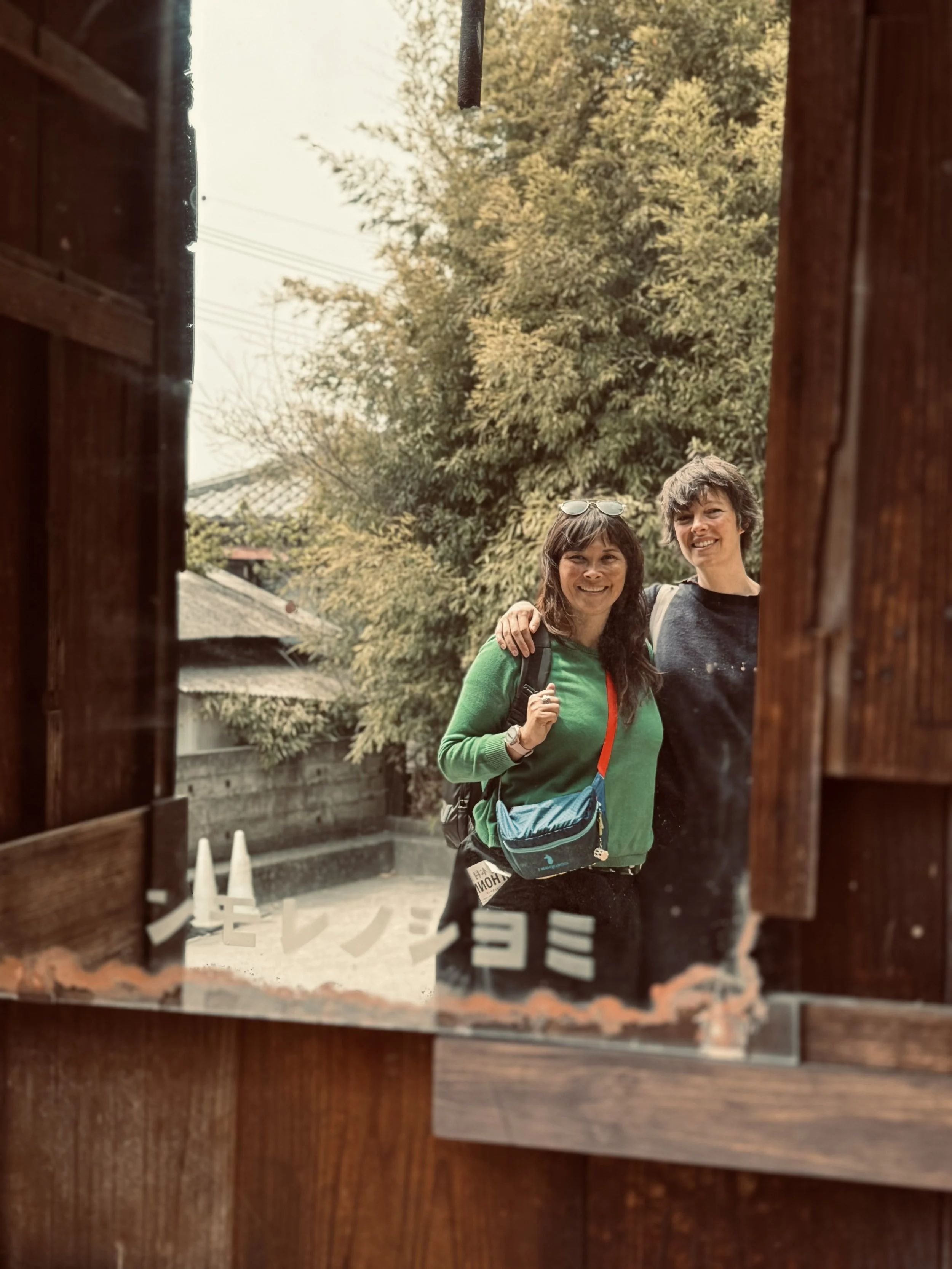
Honor and Angie
We have been friends since kindergarten.
We grew up together in Melbourne, sharing our formative years as we slowly found our way along different paths. Honor was always drawn to a creative path, with a poetic and intuitive way of seeing the world. Angie, by contrast, has always enjoyed organising, initiating, and shaping ideas into form.
Creativity has threaded through our friendship in different ways. Honor through fine art and writing. Angie through music, design and entrepreneurial work. Over time, these different ways of working have found a natural rhythm, moving between reflection and action.
Draw Closer has grown naturally from this long history. It is held by trust, shaped by contrast, and grounded in a belief that meaningful experiences are made through care, attention and time.